Bug of the Month:
Learn whats bugging you!
Bedbugs
Texas Bed Bugs
Have you been in the dark? Bed Bugs are back! In this article I will provide you with some photos and some basic information on who is at risk and what you can do to help prevent them from visiting you. With these critters prevention starts with cautious actions and preventative habits on your part.
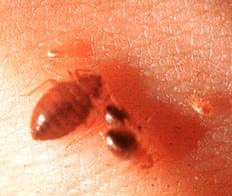
(Left) If you seen this pest (the Bed Bug) then you probably have a story or two to tell.
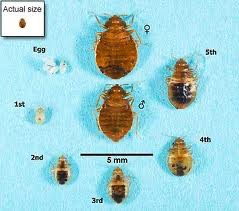 (Right) The Life cycle of the bed bug, starting from the top left, moving counterclockwise: eggs (1mm), 1st stage nymph (1.5 mm), 2ndstage nymph (2 mm), 3rd stage nymph (2.5 mm), 4th stage nymph (3 mm), 5th stage nymph (1.5 mm), unfed adult (5.5 mm), and fed adult. Photo Courtesy of Stephen Doggett, Department of Medical Entomology, Westmead Hospital, Sydney, Australia
Life Cycle
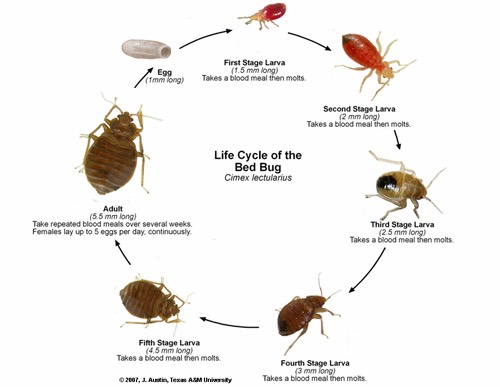
Before it's first blood meal the first stage larva is clear to white in color and almost hard to see and detect normally they will be clustered together and will be easer to spot. If you have a headboard attached to your bed look in the cracks/crevices and on the back of it. They react to the carbon of your breath.
Common Bed Bug Myths
Myth: You can’t see a bed bug.
Reality: You should be able to see adult bed bugs, nymphs and eggs with your naked eye.
Myth: Bed bugs live in dirty places.
Reality: Bed bugs are not attracted to dirt and grime; they are attracted to warmth, blood and carbon dioxide. However, clutter offers more hiding spots.
Myth: Bed bugs transmit diseases.
Reality: There are no cases that indicate bed bugs pass diseases from one host to another. Lab tests have shown that it is unlikely that the insect is capable of infecting its host.
Myth: Bed bugs won’t come out if the room is brightly lit.
Reality: While bed bugs prefer darkness, keeping the light on at night won’t deter these pests from biting you.
Myth: Pesticide applications alone will easily eliminate bed bug infestations.
Reality: Bed bug control can only be maintained through a comprehensive treatment strategy that incorporates a variety of techniques and vigilant monitoring. Proper use of pesticides may be one component of the strategy, but will not eliminate bed bugs alone. In addition, bed bugs populations in different geographic areas of the country have developed resistance to many pesticidal modes of action. If you're dealing with a resistant population, some products and application methods may only serve to make the problem worse. It is a good idea to consult a qualified pest management professional (PMP) if you have bed bugs in your home.
Bed Bug Biology
The common bed bug (Cimex lectularius) has long been a pest – feeding on blood, causing itchy bites and generally irritating their human hosts. Knowing what to look for is the first step in controlling bed bugs. Generally, adult bed bugs are 1/4 to 3/8 inch (4-5mm) long, brown in color, with a flat, oval-shaped body; while young bed bugs (also called nymphs) are smaller and lighter in color. (See above photos)
When not feeding, bed bugs hide in a variety of places. Around the bed, they can be found near the piping, seams and tags of the mattress and box spring, and in cracks on the bed frame and head board.
If the room is heavily infested, you may find bed bugs in the seams of chairs and couches, between cushions, in the folds of curtains, in drawer joints, in electrical receptacles and appliances, under loose wall paper and wall hangings -- even in the head of a screw. Since bed bugs are only about the width of a credit card, they can squeeze into really small hiding spots. If a crack will hold a credit card, it could hide a bed bug.
Preventing Bed Bug Infestations
Bed bugs are very successful hitchhikers, moving from an infested site to furniture, bedding, baggage, boxes, and clothing. Although they typically feed on blood every five to ten days, bed bugs can be quite resilient; they are capable of surviving over a year without feeding.
A few simple precautions can help prevent bed bug infestation in your home:
- Check secondhand furniture, beds, and couches for any signs of bed bug infestation, as described above before bringing them home.
- Use a protective cover that encases mattresses and box springs which eliminates many hiding spots. The light color of the encasement makes bed bugs easier to see. Be sure to purchase a high quality encasement that will resist tearing and check the encasements regularly for holes.
- Reduce clutter in your home to reduce hiding places for bed bugs.
- When traveling:
- In hotel rooms, use luggage racks to hold your luggage when packing or unpacking rather than setting your luggage on the bed or floor.
- Check the mattress and headboard before sleeping.
- Upon returning home, unpack directly into a washing machine and inspect your luggage carefully.
Hiring Pest Management Professionals
Getting a pest management professional (PMP) involved as soon as possible rather than taking time to try to treat the problem yourself, they are very effective at preventing further infestations. Each pest management company should have instructions for residents on how to prepare the unit for treatment which will include laundering and cleaning.
The PMP will inspect your residence, take apart furniture if necessary.
Carpenter Ants
Carpenter Ants
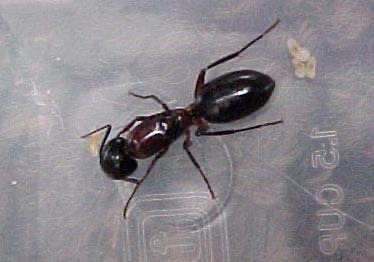
Ants: It has been reported that there are over 12,000 species of ants in the world that have already been identified, and of those only about 1,000 make their home in North America. Only 1,000, about thirteen percent (13%) are considered pests, invading urban areas here in North America. Only about 50 of the 13% may cause frequent problems. Ants are highly evolved and can be considered a dominant insect group, being one of the largest family group of insects in terms of sheer number of individual ants and number of different species. Ants and the various species can be found all over the world from the cold subarctic tundra to the hot dry deserts. A majority of ants originate from the tropics.
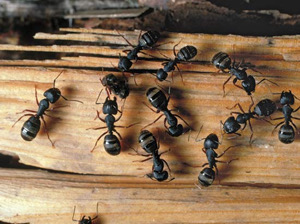
Carpenter ants are social insects that make their colonies primarily in wood. They hollow out wood to build their nests, making their galleries and chambers velvety-smooth as if a carpenter had sanded the surfaces. Their tunneling in wood and foraging for food and water lead to their “pest” status in and around homes.
The presence of carpenter ants can mean that a building has problems that need attention, such as moisture, rotting wood or other conditions conducive to ant infestation. In Texas, there are at least 14 species of carpenter ants that destroy wood.
Biology and Habits
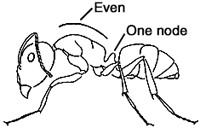
The ants develop through several stages of metamorphosis: egg, larva, pupa and adult. All four stages can be found in a colony. The adults have six legs, three distinct body regions with a constricted waist, and prominent, elbowed antennae. They can be solid black, yellowish red, or a combination of black, red and reddish orange. A carpenter ant has only one segment or node between the thorax and abdomen. It also has a circle of hairs at the tip of the abdomen and an evenly rounded thorax when viewed from the side.
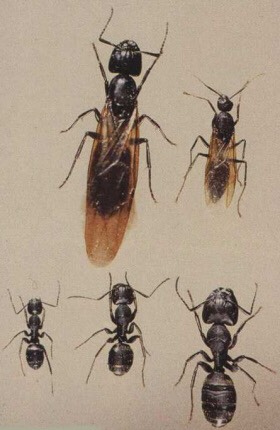
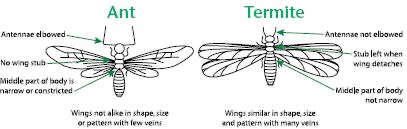
Winged carpenter ants resemble winged termites and, in Texas, it is not uncommon for both of these important wood-destroying insects to swarm at about the same time. It is vital that they be identified accurately, because control measures differ greatly for the two insect groups. Click termites to learn about them
Ants have small, constricted waists. Their wings are of unequal length, with the front pair longer than the hind pair. Their antennae are bent at right angles about mid-length. Termite bodies are not narrowed at the middle. Their wings are of equal length, and their antennae are rather straight with bead-like segments. As shown above
Mature carpenter ant colonies produce male and female winged reproductives from early spring to summer. Environmental conditions cause them to emerge and swarm. They mate during these swarms or nuptial flights, which may occur over several days or weeks. After the nuptial flight, males die and females begin searching for a nesting site.
After establishing the nest, the female deposits 15 to 20 eggs. The queen cares for the initial larvae and feeds them with fluids secreted from her body. Under favorable conditions, the eggs progress through the larval and pupal stages to become worker ants in about 2 months. After becoming adults, new workers expand the nest, excavate galleries and provide food for the queen and larvae.
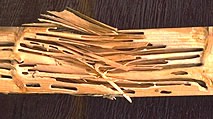
The first-generation worker ants are small. After foraging for food outside of the nest, worker ants return to regurgitate partially digested food to nourish developing larvae and the queen. Older larvae are fed solid food by the workers.
Carpenter ant colonies remain small during the first year, but they grow rapidly, and in 3 to 6 years will contain up to 3,000 ants. Winged reproductives are produced by older, mature colonies. Once colonies are mature, workers are produced continuously to replace those that die, while 200 to 400 winged individuals are produced each year for reproductive flights. Winged reproductives usually develop in late summer, spend winter in the nest, and swarm in spring and early summer.
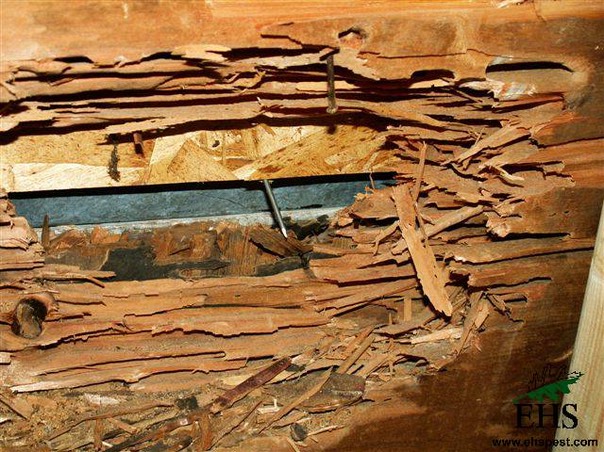
Nesting Sites
Carpenter ants normally build their nests in hollow trees, logs, posts, landscaping timbers and wood used in homes and other structures. Unlike termites, ants do not feed on wood but excavate galleries in wood as places to build nests. Carpenter ants prefer to nest in moist or decayed wood, frequently entering existing cavities or void areas through cracks and crevices.
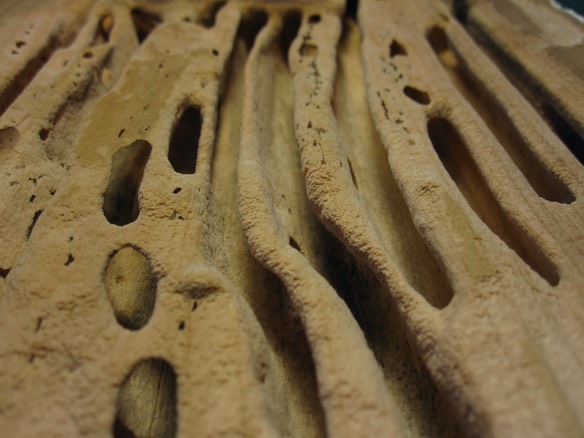
The ants usually cut galleries with the grain of the wood, following the softer parts. They leave the harder wood as walls separating the tunnels, but cut openings in these walls to connect the galleries. Access to the outside may be through natural openings, or the ants may cut openings where none exist.
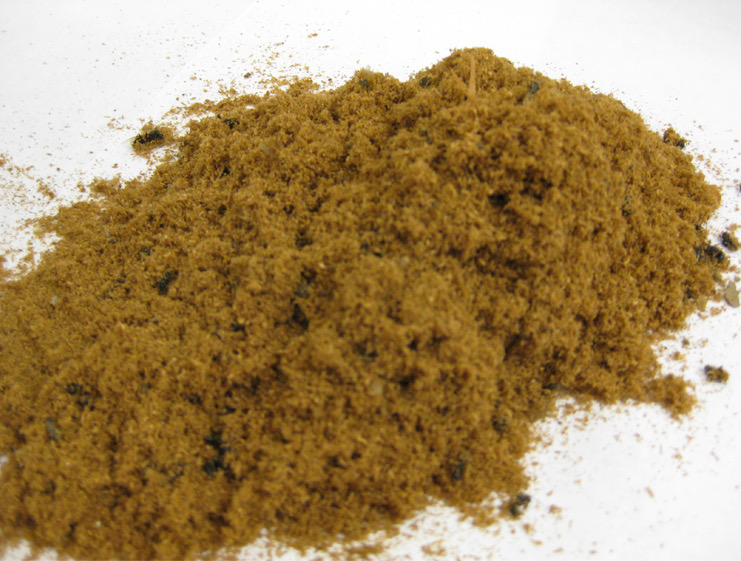
Occupied galleries are kept very clean. Shredded wood fragments from the excavations are carried from the nest and placed outside. Cone-shaped piles of these fragments, often called frass piles, sometimes build up beneath the nest openings. Frass piles may also contain excretions, dead carpenter ants, and bits of wood, sand, soil or insulation and may vary in color.
Frass is not always visible because ants may dispose of it in hollow parts of trees, in void areas in structures, or in unused galleries within the nest.
Carpenter ants become pests when they nest or forage for food in homes and other buildings. Usually, an infestation occurs when all or part of an existing colony moves into a house from outside. Ants enter structures through several common routes: where tree branches or utility lines contact a structure, through cracks and crevices around windows and in foundation walls, through ventilation openings in the attic, and through heating or air-conditioning ducts.
Carpenter ants like to nest in wood that is very moist or has been previously damaged by water or termites. A colony develops best in wood with a moisture content of more than 12 to 15 percent. This can happen where there is a leak, condensation or continuously high, relative humidity. Typical nest locations include:
- wood affected by water seepage from plugged drain gutters, damaged flashing, wood shingle roofs, poorly fitted or damaged siding, improper pitch of porch floors, or leaking door and window frames;
- wood between the roof and ceiling of flat-deck porches;
- areas around plumbing in kitchens and bathrooms where water leaks have soaked the surrounding wood; • wood in contact with soil, such as porch supports, siding and stair risers;
- wood in areas of poor ventilation or condensation, such as cellars, crawl spaces, attics and under porches;
- wood scraps in dirt-filled slab porches;
- voids under bathtubs or hot tubs;
- hollow wooden doors, hollow ceiling beams, hollow shower and curtain rods, and hollow porch posts and columns;
- window sill plates and floor joists;
- voids under attic insulation or under insulation in crawl spaces; and
- voids above windows and doors.
German Roaches
Cockroaches on Discovery
The German Cockroach
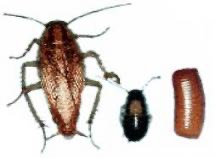
The most common cockroach found in homes, apartments, restaurants, supermarkets, hospitals and other buildings where food is stored, prepared or served. They are carnivorous insects feeding on its own at times. They eat human and animal feces, food of all kinds and may hitchhike into dwellings on egg cartons, soft drinks cartons, sacks of rice, potatoes or onions, used furniture, beer cases, storage boxes, etc. These cockroaches will move from building to building during the warm summer months. They can develop into large populations and live throughout the home, especially in kitchens and bathrooms. One (1) female roach can produce an infestation of 300,000 german roaches in one year. Cockroaches can foul food and produce an unpleasant odor. A significant number of people are allergic to cockroaches, and may exhibit chronic symptoms without realizing the cause of there watery eyes or runny noses. Cockroaches can also contaminate food with bacteria that can cause food poisoning, dysentery, or diarrhea. Eliminating roaches is very important, as they pose a major health risk Roaches travel about and eat any waste and food products, including as stated above human and animal feces. This means they can easily transmit disease with viruses and bacteria. In fact, at least 100 species of bacteria have been isolated from cockroaches, such as Salmonella, E. Coli, and Shigella.
Life Cycle and Habits of The German Cockroach
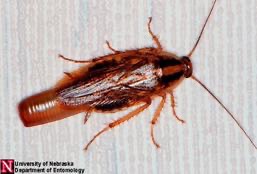
German cockroach females, unlike most other cockroaches, carry ootheca (egg case) that protrude from their abdomen until the eggs are ready to hatch. The ootheca is then dropped in a secluded location, where the nymphs emerge within one day. A female may produce four to eight cases during her lifetime, each containing 30 to 48 eggs. Eggs hatch in about one month, and nymphs develop in 1-1/2 to 4 months. Adult female cockroaches live about 6-1/2 months and males live slightly less.
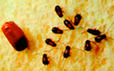
The German cockroach produces more eggs and has more generations per year (three to four) than other cockroaches, thus troublesome infestations can develop from a few individuals. This cockroach has spread throughout the world by commerce and transportation. It is the most prevalent pest in apartments in the United States. During the day, these cockroaches hid in clusters behind baseboard molding, in cracks around cabinets, closets or pantries, behind wall hangings and pictures, and in and under stoves, refrigerators and dishwashers. The crevices behind kitchen drawers and beneath the sink are one of the primary cockroach harbor ages. If clusters of cockroaches are seen during the day, the population is large. Both nymphs and adults are very active and capable of running rapidly. Without food and water adults may die in two weeks. However, they can live with only water for up to a month.
Common Myths
- A cockroach problem is a sign of a dirty home.
Once again this is wrong. Cockroaches will live in clean homes, however larger colonies are often found in unclean homes due to the increased food source available. - All cockroaches lay several egg sacs a month.
Inaccurate. The German cockroach will normally only lay one sac per month, however each sac can hold approximately 40 babies. - There are albino cockroaches.
This is false, the reality is that cockroaches shed their skin and for a few hours, while the new skin dries, they are white in color. - Cockroaches are active all night.
Once again not entirely true. Cockroaches are actually very lazy and in general will only stay active for approximately 4 hours during the night.
German Cockroach Biology
Identification
Most cockroaches have a flattened, oval shape, spiny legs, and long filamentous antennae. Immature stages are smaller, have undeveloped wings and resemble the adults. Adult German cockroaches are light tan to medium brown except for the shield behind the bead marked with two dark stripes (separated by a lighter stripe), which run lengthwise on the body. Adults are about 1/2 to 5/8 inch long, have wings, but rarely fly. Wings cover the entire abdomen of the females and all except the abdominal tip in the bales. The male is light brown and rather boat-shaped. Whereas the female is slightly darker with a broader behind. Young cockroaches (nymphs) develop through 6 to 7 stages (instars) over 74 to 85 days (varying with temperature) nymphs hatching from eggs are less than 1/8 inch long are wingless and nearly black with a single light stripe, separating two black bands, running down about halfway of the middle of the back. Egg capsules (ootheca) are light tan and about 1/4 inch long.
Preventing Infestation of German Roaches
There are many control strategies available to help solve cockroach problems. Cockroach control requires more than just insecticides. You will be most successful if you use a combination of methods. Preventing access to shelter, food, and water around your home is one of the best control measures both outside and inside.
Outdoor habitat changes that may help include:
- Remove as much mulch or debris around the building as possible. Prune tree limbs and shrubbery so they do not touch the house. Stack wood away from the house and raise the piles off the ground.
- If you have pets, do not leave food bowls out overnight and keep kennel areas clean.
- Dispose of garbage in sealed bags and in garbage cans with lids. If you recycle, rinse out cans and bottles, and keep your recycling areas in a dry location away from the house. Do not let your recycling area become too cluttered.
- Keep screens and weather stripping in good repair. Check attic vents and windows. Caulk large openings around outside drainage lines and sewer vents. Steel wool can be used as a temporary filler until you can caulk openings properly.
- Remember to check grocery bags, boxes, firewood, and other items that may serve as a means of entry for cockroaches.
If cockroaches do get inside, the following tips will help you control them:
- Keep food and garbage in tight containers.
- Clean up all crumbs and spills on floors, counters, and shelves as soon as they occur.
- Keep faucets and drains under sinks and appliances in good repair. Do not let water stand in the sink for long periods of time.
- Keep clutter from accumulating, especially in kitchens and bathrooms. Cockroaches often hide in messy cabinets and in stacks of newspapers, bags, and rags.
- Vacuum and sweep floors often. Vacuuming is very important because it can remove small food crumbs, and cockroach egg-cases that may not be killed by insecticides.
- Good sanitation is important, both inside and outside the house. It is often the best control measure for cockroaches.
Hiring Pest Management Professionals
Despite the fact that a variety of assumptions made about the cockroach are actually inaccurate, we must not forget the fact that they are unhygienic pests with the potential to spread disease and cause damage within your home. Cockroaches have the potential to breed very quickly so it is important to consider treatment at the first sign of a problem. Getting a pest management professional (PMP) involved as soon as possible rather than taking time to try to treat the problem yourself, they are very effective at preventing further infestations. Each pest management company should have instructions for residents on how to prepare the unit for treatment which will include laundering and cleaning.
Termites
20% OFF TERMITE TREATMENT FOR PRE-SWARM SEASON
A TRANSFERABLE 2 YEAR RENEWABLE TREATMENT WARRANTY
Call Now: 940-231-5620 Click here for details
Biology of Eastern Subterranean Termites
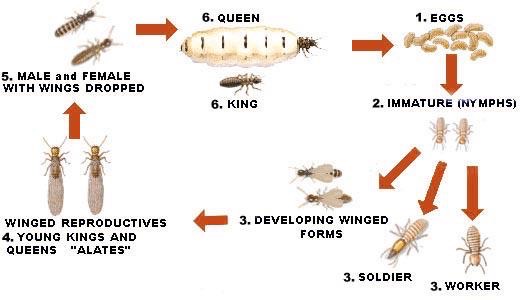
The queen termite is an egg laying machine; her body is enormous compared to her off-spring; she can live more than 25 years and produce more that 2,000 eggs a day.
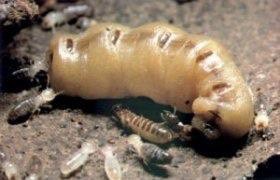
The life-cycle of subterranean termites
1. Eggs
2. Immature (nymphs) develop into:
3. Worker
3. Soldier
3. Developing Winged Forms
4. Winged Reproductives (Alates) Young Kings and Queens develop in preparation for swarm.
5. Male and Female with Wings Drop after a swarm
6. Queen and King produce new colony
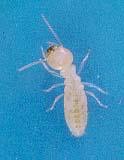
The workers are by far the largest caste in the eastern subterranean termite colony and the one that does the damage; they are a creamy translucent color, soft bodied and carry out all work in the nest, including gathering food (timber and other cellulose); constructing tunnels; repairing and enlarging the colony nest; grooming each other and feeding the soldiers, the king, queen and also caring for the young nymphs until mature.
Eastern subterranean worker termites are small in size, about half the size of match-head or 1/8" long and are soft bodied insects. White in color, they have no wings, are sterile, blind and work 24 hours a day for their entire 2 year life span.
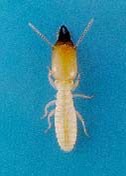
The soldiers are the defenders of the colony, particularly against marauding ants.
The soldier termite is usually the first to be seen in large numbers when any active termite workings (mud shelter tubes or damaged timber) are opened. Soldier termites will rush out to guard the opening while worker termites repair the breach.
Eastern Subterranean Termite Swarm In northern Texas, swarming takes place in the spring, swarming usually follows rain when humidity is high and the soil temperature is at or above 70°F. The swarmers leave the colony in the thousands when a mature termite nest is large and well established.
The swarmers (reproductives) are called "alates" and are commonly seen when they swarm during daylight; they have eyes; are poor fliers but are swept along by the wind; they land, drop their wings, find a mate to become king and queen of a new termite colony.
The eastern subterranean termite swarmers are about 3/8" long (including wings) with a dark brown body and a small fontanelle (frontal gland pore) on its head. Their wings are brownish grey with two dark solid veins along the forefront of the front wings. The front wing is distinctly larger than hind wing.
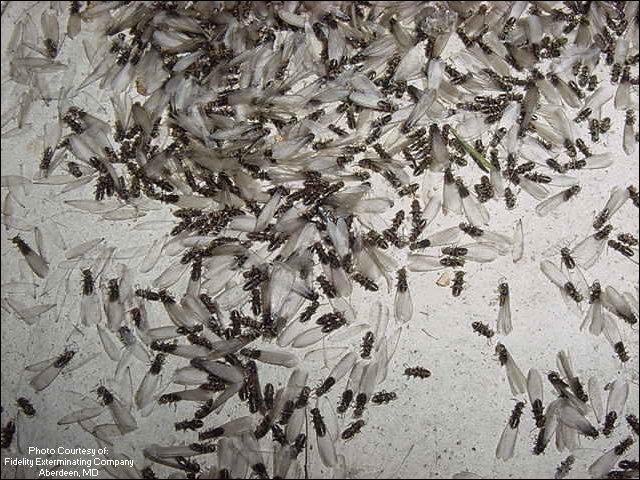
Eastern subterranean termites swarm in large numbers out side over a wide area to find a mate from another colony nest to start up a new colony. A suitable location for nesting should provide moisture and a readily available timber food source close by.
Colony nest development is slow in the first few months, with the egg-laying capacity of the new queen termite peaking after a few years, producing up to 10,000 offspring a year. The queen may live for many years and workers up to two years. The swarmers are emitted in their thousands when a mature termite nest is large and well established. Swarmers are usually produced after this period and are an indication a large termite nest is in the vicinity.
The colony nests of Eastern subterranean termites are usually located in the ground below the frost line, but above the water table. Mud galleries or "shelter tubes" are constructed across hard objects in order to gain access to timber food sources.
They build a central colony nest from which they construct underground tunnels that radiate within a 100 yard radius from a central colony nest in search of a timber (cellulose) food source.
Timber Damage
Eastern subterranean termites are highly destructive to douglas fir and other common building timbers. They can rapidly eat out the internal sections of structural timbers devouring mainly the spring wood, and preferring to leave the harder summer wood sections, as a result, infested timbers are often left as a thin shell with layered hollow sections packed with moist soil. These termites love a moist dark damp environment. It is essential for their survival.
Destructive nature of Eastern subterranean termites
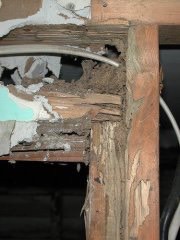
The Eastern subterranean termite is a serious timber pest causing damage throughout the areas where it is located. It is estimated that more than 1 in 5 homes in the high activity areas, have been or will be visited at sometime by these termites. These termites eat through the centre of susceptible timbers leaving nothing but a thin veneer of timber and/or paint. They will pack mud in cracks and joints in timber to prevent loss of humidity and resultant dehydration.
Eastern subterranean termites constantly search for new food sources. They are known to enter buildings through cracks in concrete flooring or to travel under parquetry or tile flooring through gaps of less than 1/16" wide.
Several years are required before the termite colony reaches the typically mature size. In some locations an Eastern subterranean termite colony can contain several million termites foraging over a wide area (up to 12,000 square feet) and actively feeding on trees and freestanding poles as well as buildings and other timber structures.
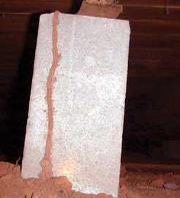
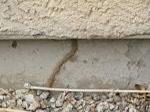
Termites travel in humidified mud-shelter tubes or galleries. The picture on the left and right shows mud shelter tubes that subterranean termites have constructed over a solid object, in this case, the footer and pier of a home.
Subterranean termites travel in these mud shelter tubes as protection from predators, sun-burn, dehydration and to maintain a high humidity environment and temperature (75 to 95F) in their central colony nest and is essential for their survival.
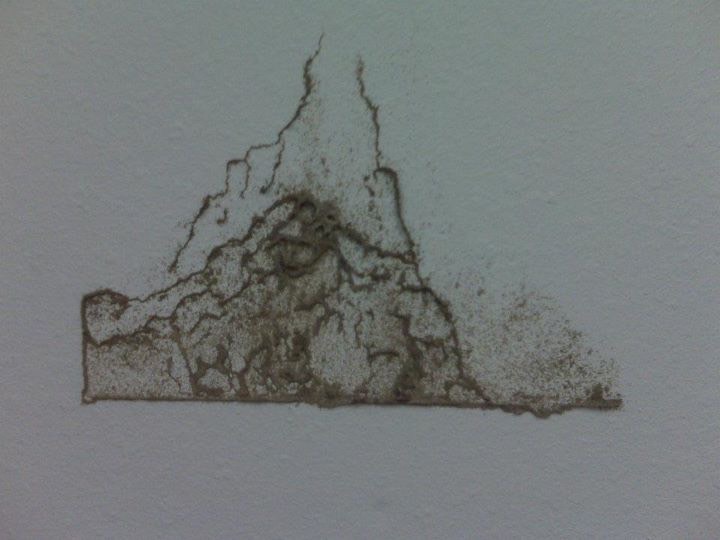
(Above) The wall were the wall hanging was.
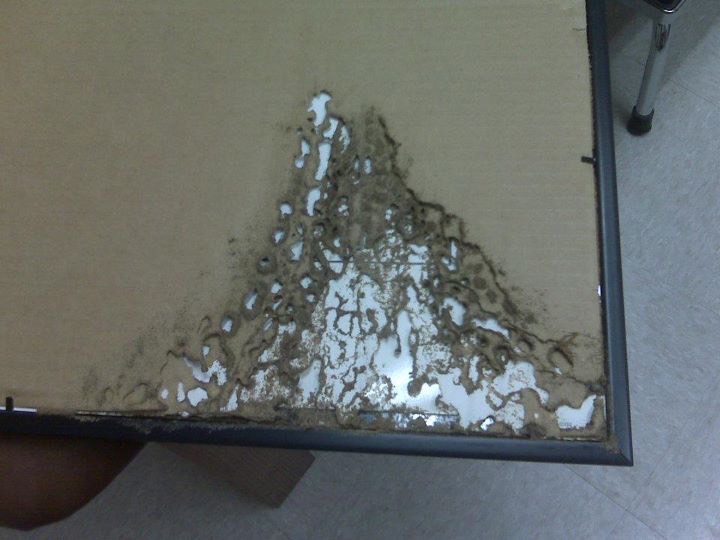
(The two photo's above show how Easter Subterranean Termites found a way up the interror of a wall and out behind a wall hanging through the sheetrock. (Denton Texas))
Eastern subterranean termites hide, preferring to enter a building through areas inaccessible to inspection, such as, through in-fill patios, bath traps, expansion joints and cracks in concrete slab from areas touching the ground.
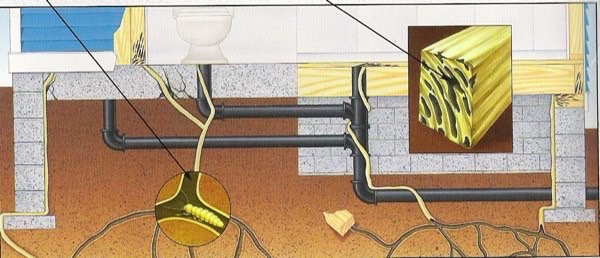
Eastern subterranean termites can pass through a 1/16” - 1/32" crack(s) or an expansion joint (eating through the rubber compound) between adjoining concrete on ground flooring. They can also travel under parquetry, floor tiles, and on pipes to get to the wall framing timbers.
Only the worker termite caste can digest timber by the use of symbiotic protozoa in their gut. Worker termites feed their partly digested semi-liquid food, regurgitated from their mouth or passing from their anus, to the other termites, a process known as trophallaxis.
Eastern subterranean termites have a well ordered social system with amazing engineering capabilities and an acute survival instinct; they obtain moisture from the soil and moist decaying timber, and communicate using pheromone signals. The mutual feeding, constant grooming and close social habits of termites are used to advantage in modern termite control products.
Certain hi-tech termite products are now on the market that have a delayed lethal effect on termites which readily pass on lethal doses of chemicals to other termites in the central colony nest during the mutual grooming and feeding destroying the colony nest usually within 90 Days.

A Smart Pest Control
940-231-5620
www.365pest.com
Serving Denton County
and
surrounding areas
